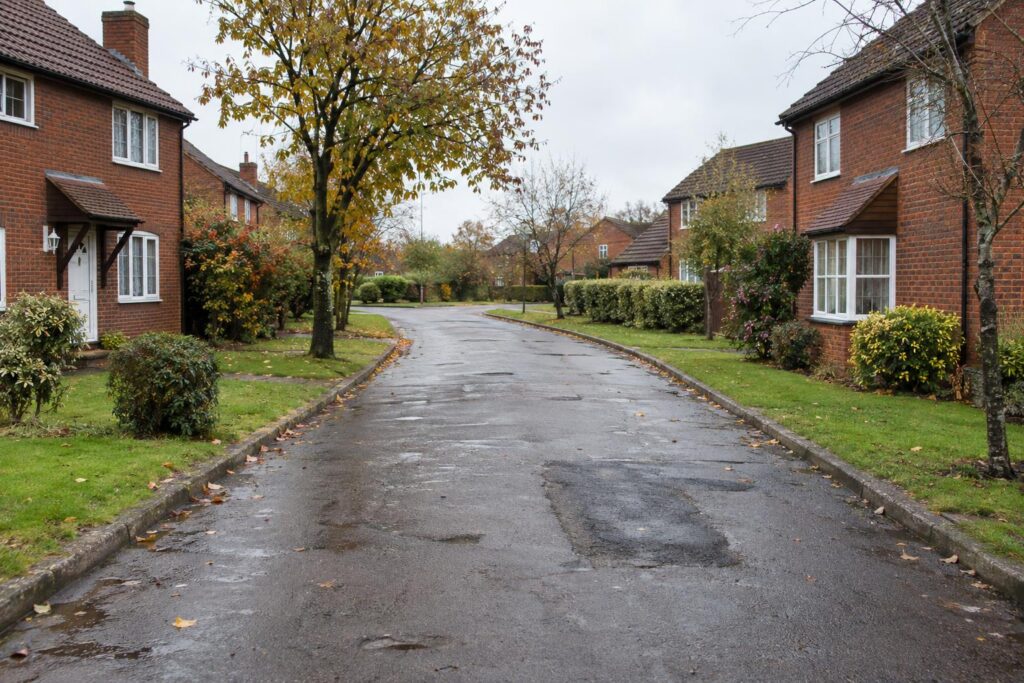
An unadopted road is a road the local highway authority has no duty to maintain. In law it is a street that isn’t a highway maintainable at public expense, so the cost of looking after it falls on the owners of the properties along it (the frontagers) or, on many newer estates, a management company.
This guide covers England and Wales, where the Highways Act 1980 sets the rules. It’s written for the people who build, manage and work on these roads: developers, management companies, facilities managers and contractors.
Unadopted roads still need resurfacing, drainage and repairs like any other road. McFadden Utilities carries out tarmac and road surfacing on private and unadopted roads for residents’ groups and management companies.
Unadopted doesn’t mean private
The most common mix-up is reading “unadopted” as “private, keep out”. Adoption is about who pays for the upkeep. On its own, it says nothing about who is allowed to use the road.
Many unadopted roads are still public highways. The public has a right to walk or drive along them, but no council has taken on the duty to repair them. Others are private land, where only the owners and people with their permission have a right of access.
To check which one a road is, ask the highway authority whether it’s on its list of streets maintainable at public expense. Every highway authority must keep that list, and anyone can inspect it free of charge. The title deeds then show who owns the road and what rights of access go with each property.
Why unadopted roads exist
Unadopted roads fall into two groups. The first is older streets, many dating from the 19th century, that were never made up to the standard the council required and so were never taken on.
The second is new estates, where adoption has become the exception. A Home Builders Federation survey of councils found that only about one in ten developments of 10 or more homes built over three years had their roads adopted. In a third of the councils that replied, none had.
Where a council won’t take the roads on, they pass to a management company and the residents pay for their upkeep through a service charge. On many modern estates, that makes the management company the one commissioning road repairs and resurfacing.
What a council needs before it adopts a road
A council won’t adopt a road just because it’s in good condition. The road has to meet the authority’s adoption policy, and those policies set tests that some roads can never pass.
Surrey County Council’s road adoption policy is a clear example. Surrey adopts residential roads where they:
- are built to a satisfactory standard
- connect to an existing publicly maintained highway
- serve six or more homes, or otherwise have wider public use
- come with commuted sums paid for future maintenance, where the council requires them
So a well-built private drive serving five houses, or an estate road that doesn’t join the public network, can stay unadopted whatever state it’s in. For new estates the usual route to adoption is set out in McFadden’s guide to how a Section 38 agreement works.
Building on an unadopted road: the advance payments code
Developers building next to an existing unadopted road can run into a rule that rarely comes up until it holds a job. Under section 219 of the Highways Act 1980, the advance payments code, no work can start on a new building that will front a private street until the owner has paid, or secured, the sum the street works authority requires towards future street works in that street.
The payment is held against the cost of making up the street later, if the authority uses its private street works powers. Starting work without it paid or secured is an offence.
There are exemptions. The main one for developers is where a Section 38 agreement covers the street, or the part the building fronts, and the road will be adopted once the works are done. So the code is worth checking at the planning stage, not when the groundworks are about to start.
Can owners make the council adopt a road?
Under a Section 38 agreement, adoption is a deal the council can decline, which is why the usual answer is that councils have no duty to adopt. For existing unadopted roads, though, the Highways Act gives the frontagers a route in set circumstances.
In sections 228(7), 229 and 230(5), a majority of owners can require the authority to make up the street under the private street works code, or to declare it adopted once the works are done. Each route has its own conditions, such as an advance payment already made or a notice already served for urgent repairs.
The catch is the cost. Under the private street works code, the cost of the works is normally recovered from the frontagers, so adoption comes after the owners have paid to bring the road up to standard.
Utilities and street works under an unadopted road
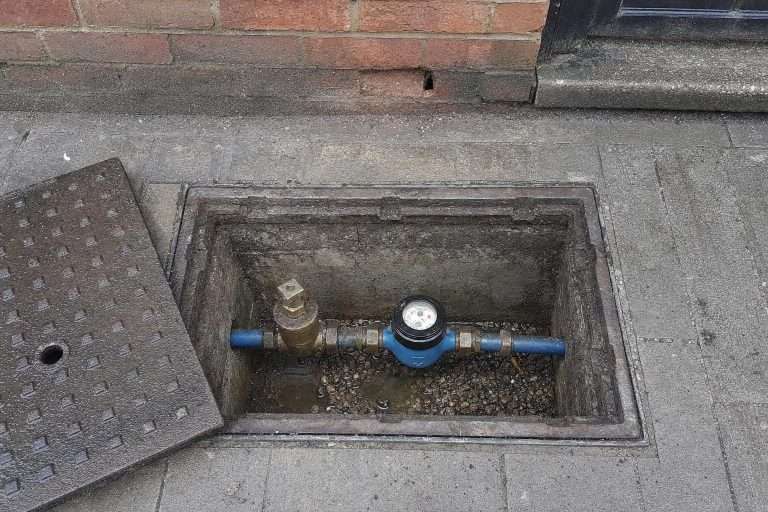
Water mains, cables and service pipes run under unadopted roads just as they do under adopted ones, and they still need connecting, repairing and replacing. The road’s status changes who the utility deals with, not whether the rules apply.
The New Roads and Street Works Act 1991 (NRSWA) applies to streets that aren’t maintainable highways, with some exceptions and adaptations set by regulations. Under section 49 of the Act, the street authority for an unadopted road is its street managers: whoever is liable to maintain it or, if nobody is, whoever manages or controls it. On a modern estate that’s often the management company.
Reinstatement counts as part of the street works. When a trench is dug in a private estate road, the surface still has to be put back properly, from the backfill to the final layer. McFadden’s reinstatement works are carried out to NRSWA specification, and the wider street works regime is explained in the guide to the NRSWA Red Book.
That means planning for the surface, the drainage and the patches left by utility work, rather than waiting for the potholes. McFadden resurfaces and repairs private and unadopted roads for residents’ groups and management companies. The tarmac and road surfacing service shows how a job runs, from site visit to finished surface.
Questions on this topic
The owners of the properties that front onto it, known as frontagers, unless the deeds or a management company arrangement say otherwise. On many new estates a management company looks after the roads and recovers the cost through a service charge. The highway authority has no duty to maintain an unadopted road, though it can require urgent repairs where the road is a danger to traffic.
It can be. Adoption is about who maintains a road, not who can use it. Many unadopted roads are public highways that anyone can use, while others are private land where access depends on the deeds or the owner’s permission.
Ask the local highway authority whether the road is on its list of streets maintainable at public expense. Every highway authority must keep this list, anyone can inspect it free of charge, and some councils publish it online or as a map. A road can look finished and still be unadopted.
Yes, in most cases. Adoption under a Section 38 agreement is voluntary, and a council can decline a road that doesn’t meet its policy, for example because it serves too few homes or doesn’t connect to the public network. The exceptions are the private street works routes in the Highways Act 1980, where a majority of owners can require the street to be made up and adopted in set circumstances.
Yes. Under the New Roads and Street Works Act 1991, reinstatement is part of the street works, and the Act applies to streets that aren’t maintainable highways, with some exceptions. On an unadopted road the utility deals with the street managers, usually the owners or the management company, instead of the council.